Fan-page
 Youtube
 TikTok
 Aviamuseum
 State Aviation Museum
The Start of Air Travel in Ukraine
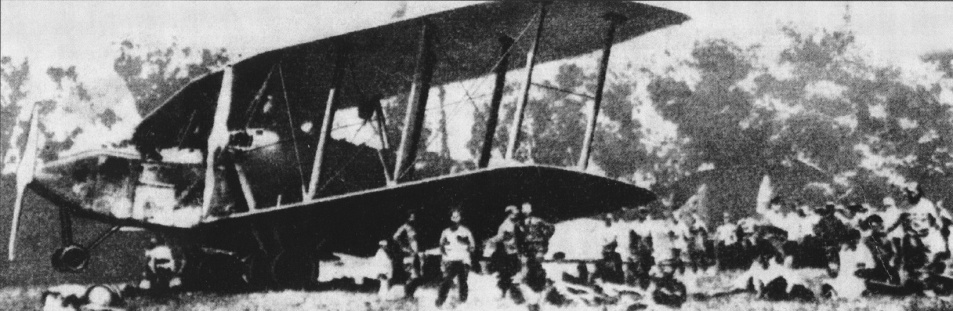
At the beginning of 1918, under the auspices of the Ministry of Post and Telegraph of the Ukrainian People's Republic (UNR), a department of airmail began to form at the initiative of military aviators. The plan was to establish an entire network of air routes and thereby establish courier connections between the most important cities in the country. Aircraft from the Military Air Fleet were allocated for this purpose. The organizers of the line were particularly attracted to the Ilya Muromets airships based in Vinnytsia. However, they were in a deplorable technical condition, and repairing them at that time proved impossible. Therefore, flights began using other types of aircraft. In April, the Military-Scientific Herald of the General Staff of the UNR wrote: "Air mail between Kyiv-Odesa and Kyiv-Poltava is already functioning. The bill concerning it has been submitted to the Central Council."
Almost simultaneously, Austrian aviators established the world's first international regular airmail line in Ukraine. It connected Kyiv with Vienna and began operating on March 20th. The first technical flight along the route Vienna-Krakow-Lviv-Proskuriv (now Khmelnytskyi)-Kyiv, covering a distance of 1,200 km, was carried out by the crew of the "Brandenburg" CI aircraft, consisting of pilot Schittgruber and observer Jaeger. The line mainly operated disarmed two-seater reconnaissance planes: in addition to the aforementioned aircraft, Rumpler C1 and Albatros C5 were also used. Initially, they carried only government documents, but soon the majority of the cargo became ordinary mail correspondence. The line's work was managed by one of the initiators of its creation, Austrian military pilot Raft.
The line continued to function successfully even after the state coup that brought Hetman Skoropadsky to power in Ukraine. Regular air communication between Kyiv and Vienna ceased at the end of October 1918 when the Habsburg Empire began to collapse. Unfortunately, it is unclear what happened during Skoropadsky's rule to the lines Kyiv-Odesa and Kyiv-Poltava. Although the hetmanate government paid considerable attention to aviation, none of the documents studied to date reveal evidence of the existence of this airmail.
The Bolsheviks were also interested in the possibilities of air transport. On February 24, 1918, their newspaper Soldier's Voice reported that a metal goods order was delivered from Odesa to Katerynoslav (now Dnipro) by an aircraft of the Anatra type piloted by Turenko. Return flights delivered mail. A fee was charged from the customers for transportation. Judging by the materials found to date, this event can be considered the first commercial use of an aircraft in Ukraine.
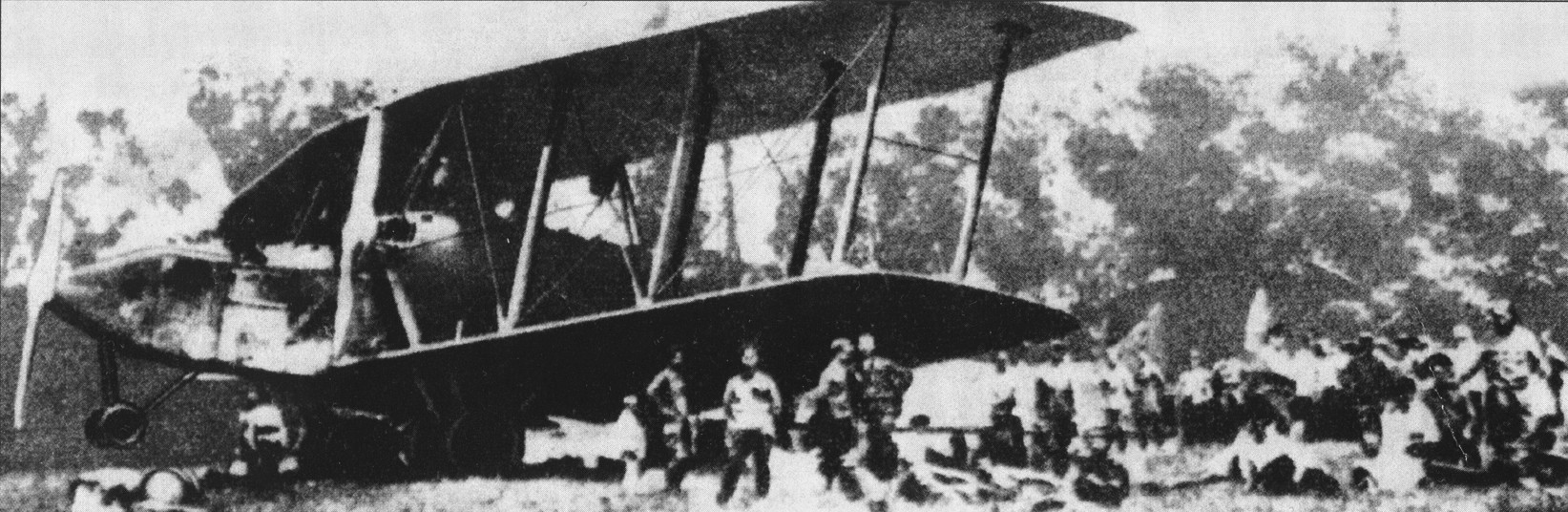
After the restoration of the UNR, there was an idea to establish air connections between Ukraine and Germany. The main goal was to transport printed Ukrainian currency from Berlin. In the summer of 1919, the UNR government concluded a contract with the German company Deutsche Luft-Reederei, which had at its disposal 9 demilitarized heavy bombers: 3 of the largest five-engine Zeppelin-Staaken R.XIVa bombers in the world and 6 twin-engine Friedrichshafen G.III and G.VI aircraft. This story is detailed in our article German Bombers in Ukrainian Service. 1919.
When the Bolsheviks established their power, they decided to connect the capitals of Soviet Ukraine and Russia—Kharkiv and Moscow—via air communication. They managed to use the Ilya Muromets airships, which were assembled in 1918-1920 from the remnants of the imperial era. In their short lifespan, these aircraft had seen a lot and were not well-suited for work on a regular airline. However, others were even worse.
Five Muromets airships were allocated for servicing the airmail and passenger line. Two were based in Moscow, and three in Kharkiv. Due to the poor technical condition of the aircraft, it was decided to conduct flights in a relay method: the aircraft that completed half the distance would land in Oryol, where passengers and mail would immediately depart for the final destination on another Muromets. The arriving aircraft in Oryol would return to its home airfield the next day after additional servicing.
Preparatory work was conducted quickly, and on May 1, 1921, air travel began. In the morning of that day, the first aircraft took off from the Khodynka Aerodrome in Moscow. The crew was led by military pilot O.K. Tumansky, a Ukrainian Cossack descendant. On board was a passenger, courier V.L. Plotnikov, who accompanied 68 secret packages weighing one and a half poods. Almost simultaneously, another aircraft commanded by military pilot O.V. Nasonov took off from Kharkiv, also carrying secret mail.
For regulatory support of the line, several documents were developed for the first time. Among them, special attention deserves an instruction for air passengers. Evidently, the authors understood that traveling on a Muromets was an unpleasant experience and it was difficult to predict the behavior of inexperienced passengers during the flight, so their activity on board was tried to be limited as much as possible. To the traditional "No Smoking" and "Do not walk through the cabin during altitude ascent and descent" were added strict prohibitions such as "No shouting, interfering with the crew performing their duties, stepping on or grabbing the control organs..."
Practice largely confirmed these concerns. The then chief inspector of the Air Fleet Antoshchenko recalled, "The planes flew at a low altitude. The turbulence was so strong that some passengers couldn't handle it, and at intermediate stations, some of them disappeared, preferring ground transport."
The worn-out Muromets also couldn't handle the strain. For example, on July 27, one of the aircraft's 4th engine failed two hours after takeoff. The crew made an emergency landing near the Prokhorivka station and fixed the problem by evening on their own. By dusk, the aircraft was able to take off again. However, an hour later, another engine failure forced another emergency landing. This time, they had to land in the dark in an unknown field, leading to the breaking of the landing gear and the "left engine mount."
In early autumn, such incidents increased. This had a detrimental impact on the regularity of flights, which began to be carried out episodically from the end of September. By that time, the Muromets had carried 80 passengers and about 400 poods of various cargo.
Flights continued until November 16, when the order "On the Suspension of Line Service for the Winter" was issued. However, the planes couldn't be fixed by the following spring, so the line's operation wasn't resumed. The poor technical condition of the Muromets and the destroyed aviation industry were the reefs on which the ambitious intentions of the Bolshevik government and the enthusiasm of aviators who created this airline were dashed. However, the practical feasibility of such routes was demonstrated.
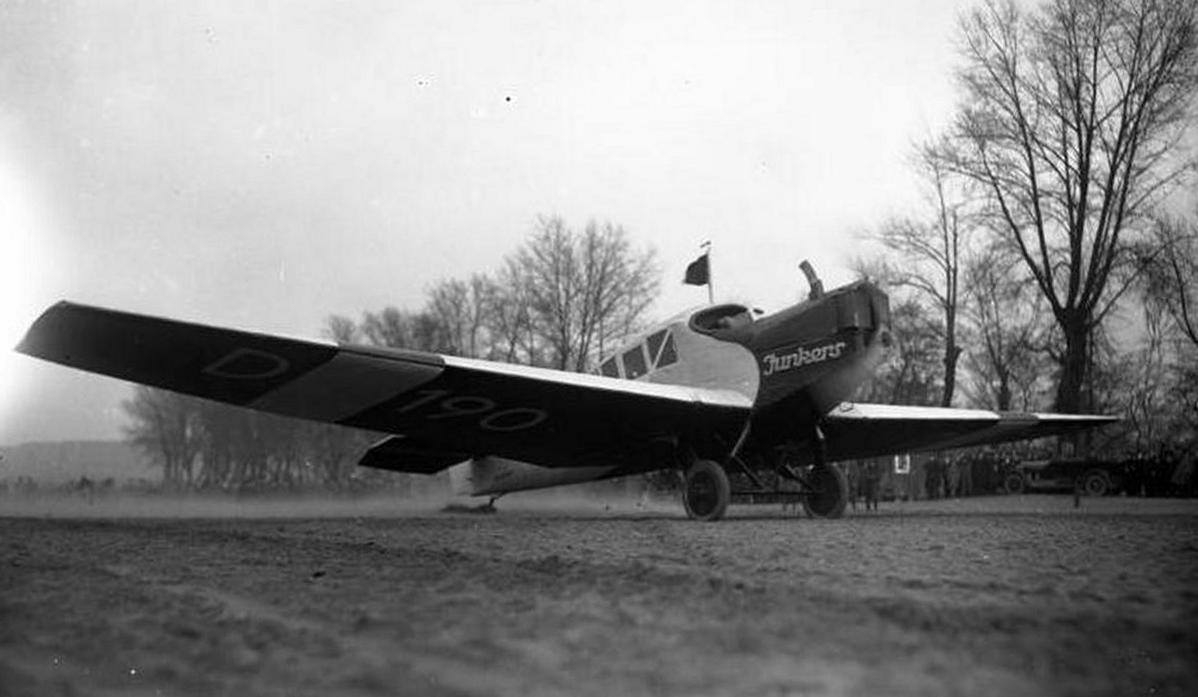
At that time, a whole system of air connections had already formed in Europe. German companies were particularly active in capturing the eastern air transportation markets. Their interests coincided with those of the governments of the Soviet republics, which sought a way out of economic blockade. For instance, in June 1922, the aviation company Junkers-Luftverkehrs established an international airline Sweden-Persia through Soviet territory, with landings in Moscow, Kharkiv, and Baku.
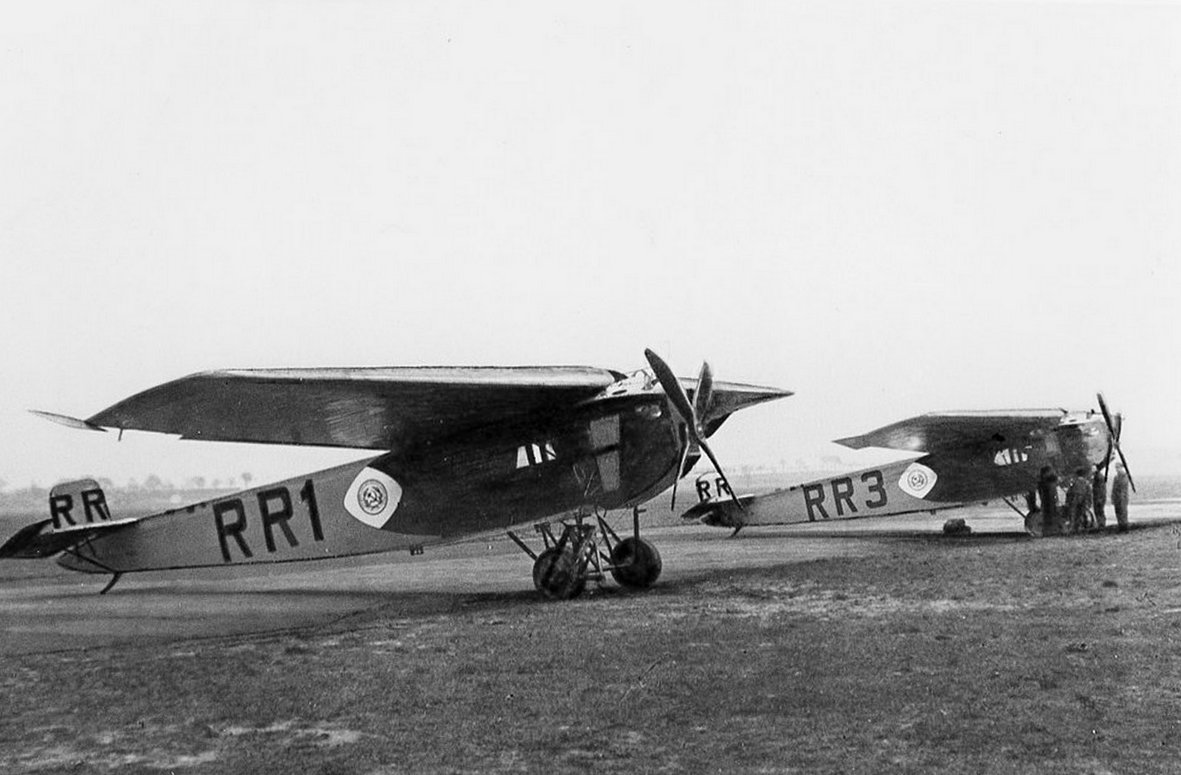
This example inspired the Council of People's Commissars of the Ukrainian SSR to approach another aviation company Deruluft in December 1922 with a proposal to extend its line Königsberg-Moscow to Kharkiv. The carrier's management considered the Ukrainian government's promise to compensate potential losses, and from January 1923, flights began.
V.Yu. Jungmeister, head of the Ukrainian Military District Air Fleet Administration, and M.L. Stamo, head of the transport department of the Ukrainian SSR's Commissariat for Foreign Trade, took an active part in this project. However, a number of organizational problems couldn't be overcome. Additionally, poor winter weather negatively impacted the regularity of flights. As a result, the flight schedule was irreparably disrupted, making further exploitation of the line unfeasible. But even negative experiences led to the emergence of air travel enthusiasts among the officials of Soviet Ukraine, ultimately leading to the creation of Ukraine's first domestic airline, Ukropovitryashliakh. However, this is already a topic for a separate article.
Rostyslav Marayev
Photo:
1 - The five-engine Zeppelin-Staaken R.XIVa aircraft used by the Deutsche Luft-Reederei company for flights to Ukraine. Summer of 1919.
2 - Fokker F.III aircraft of the Deruluft airline. Early 1920s.
3 - Junkers F.13 aircraft of the Junkers-Luftverkehrs airline. 1922.