Fan-page
 Youtube
 TikTok
 Aviamuseum
 State Aviation Museum
70 years of the Su-7B fighter-bomber
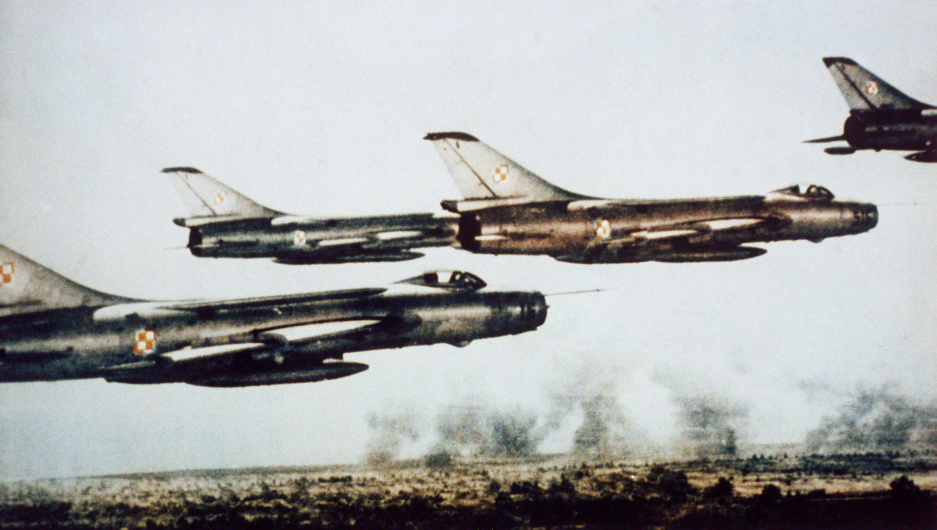
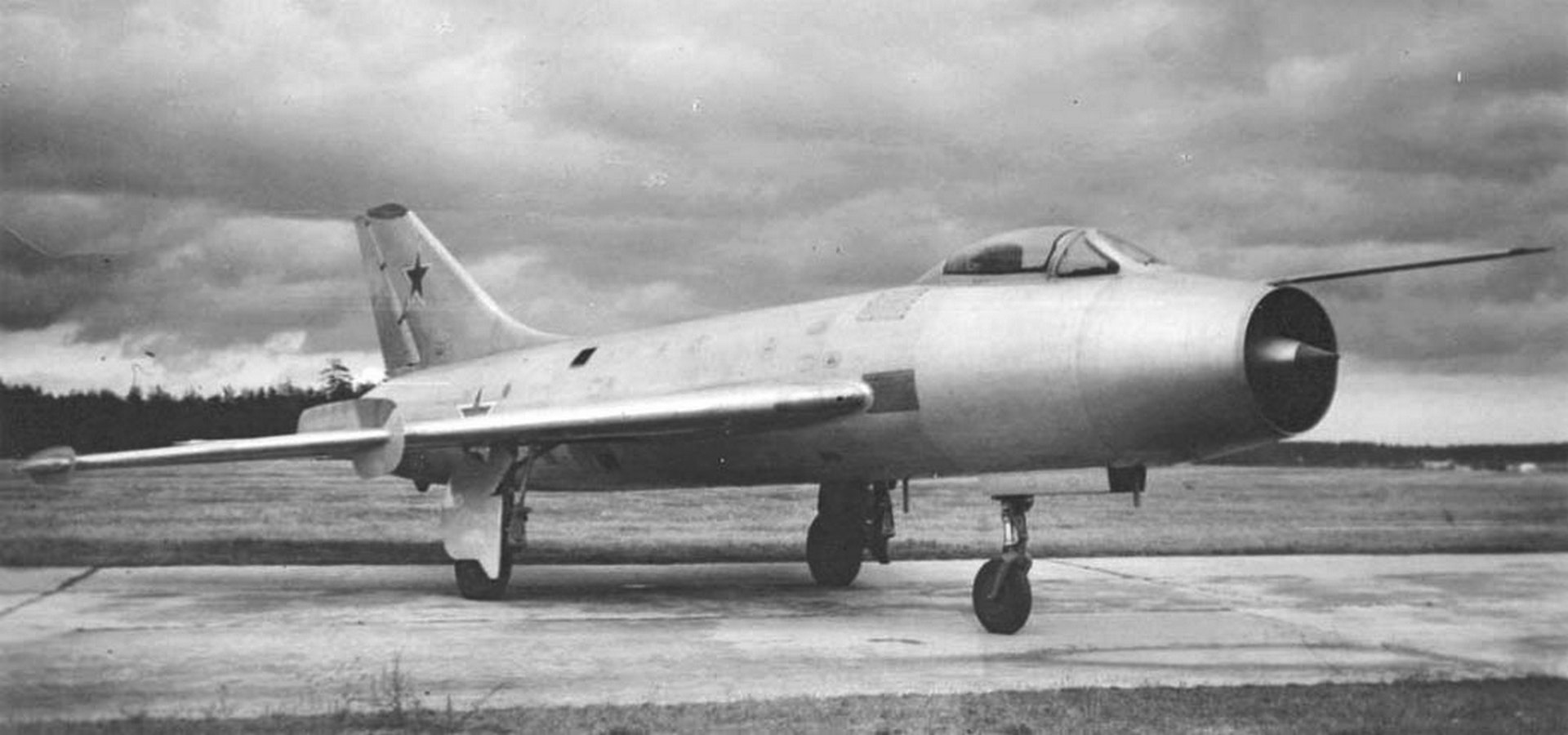
September 7 marked the 70th anniversary of the Su-7B fighter-bomber, created by Pavel Sukhoi's Design Bureau. On that day in 1955, its first prototype, the S-1, took flight.
The aircraft was developed as a fighter, and even in this capacity, it was put into serial production, with more than 130 units built. However, the military demanded a supersonic strike aircraft for frontline aviation, which was in line with the then-current trends in global aviation “fashion.” Soviet design bureaus proposed several projects, among which a specialized version of the Su-7 proved to be the best, although it did not meet the requirements of the customers.
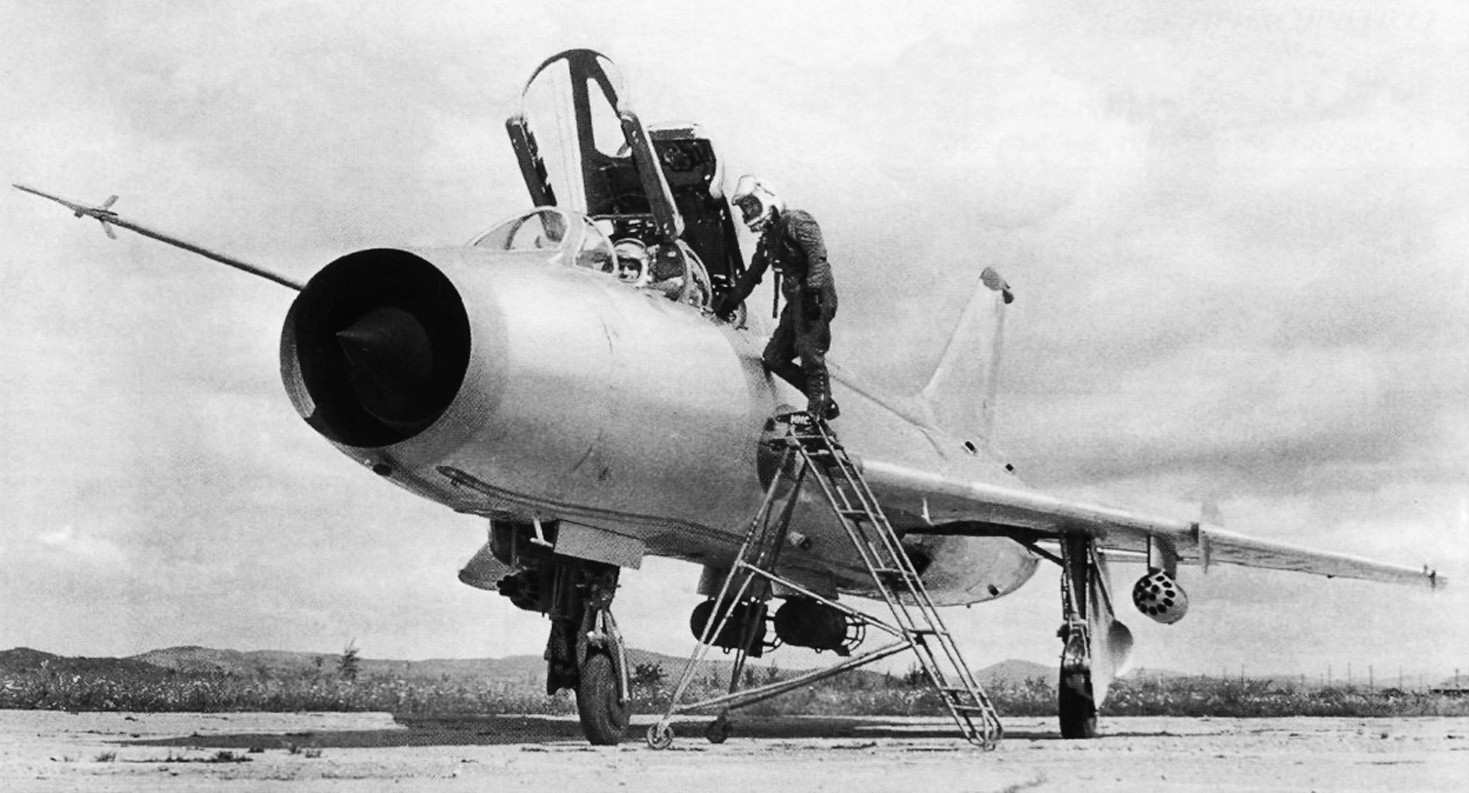
The fighter-bomber was named Su-7B, and its mass production began. Production continued until almost the end of 1972. In total, 1,839 units were built in six main variants, along with fighters. Among them, it is worth highlighting the Su-7BKL, which was designed to improve takeoff and landing characteristics and adapt it for use at field airfields. To this end, rocket boosters were used for takeoff, and small skis were installed on the main landing gear struts next to the wheels to prevent sinking into the ground. All Su-7s were equipped with the AL-7 turbojet engine, which was a milestone for the Soviet aviation industry, with a thrust of up to 9,600 kgf, developed under the leadership of Ukrainian Arkhip Lyulka.
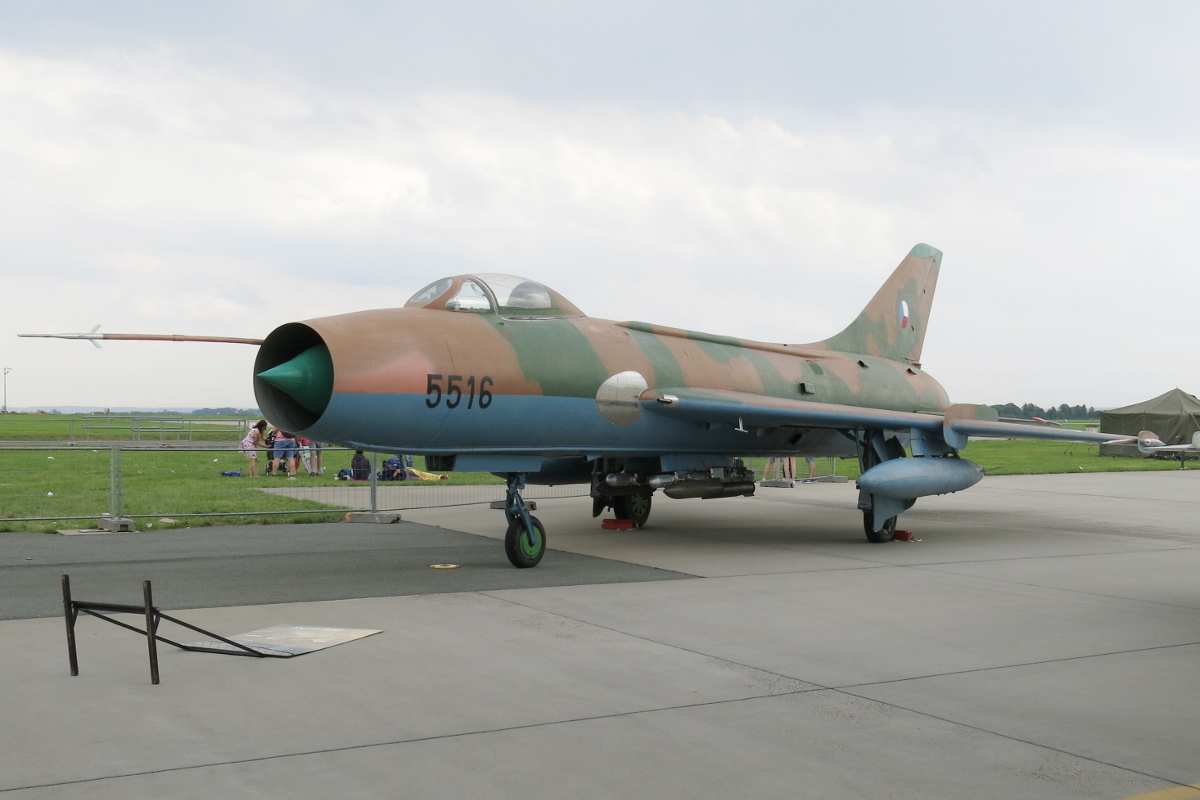
The modernized Su-7BM fighter-bomber had a length of 18.55 m, a wingspan of 9.31 m, a maximum take-off weight of 13,800 kg, a maximum speed of 2,120 km/h, and a range of over 1,100 km. The wing housed two 30 mm NR-30 cannons. The aircraft could carry up to 2,000 kg of unguided weapons, mainly bombs and missiles, on its external hardpoints. The possibility of using tactical nuclear weapons was also envisaged.
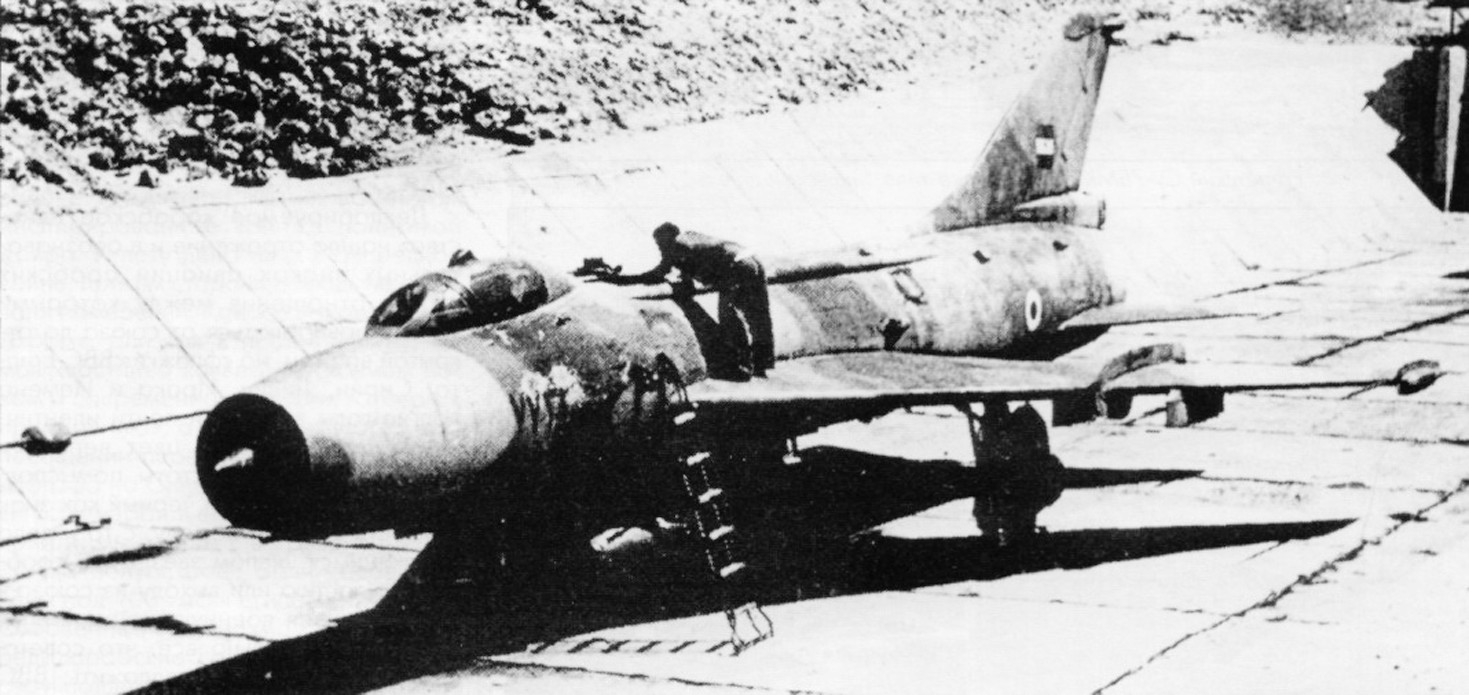
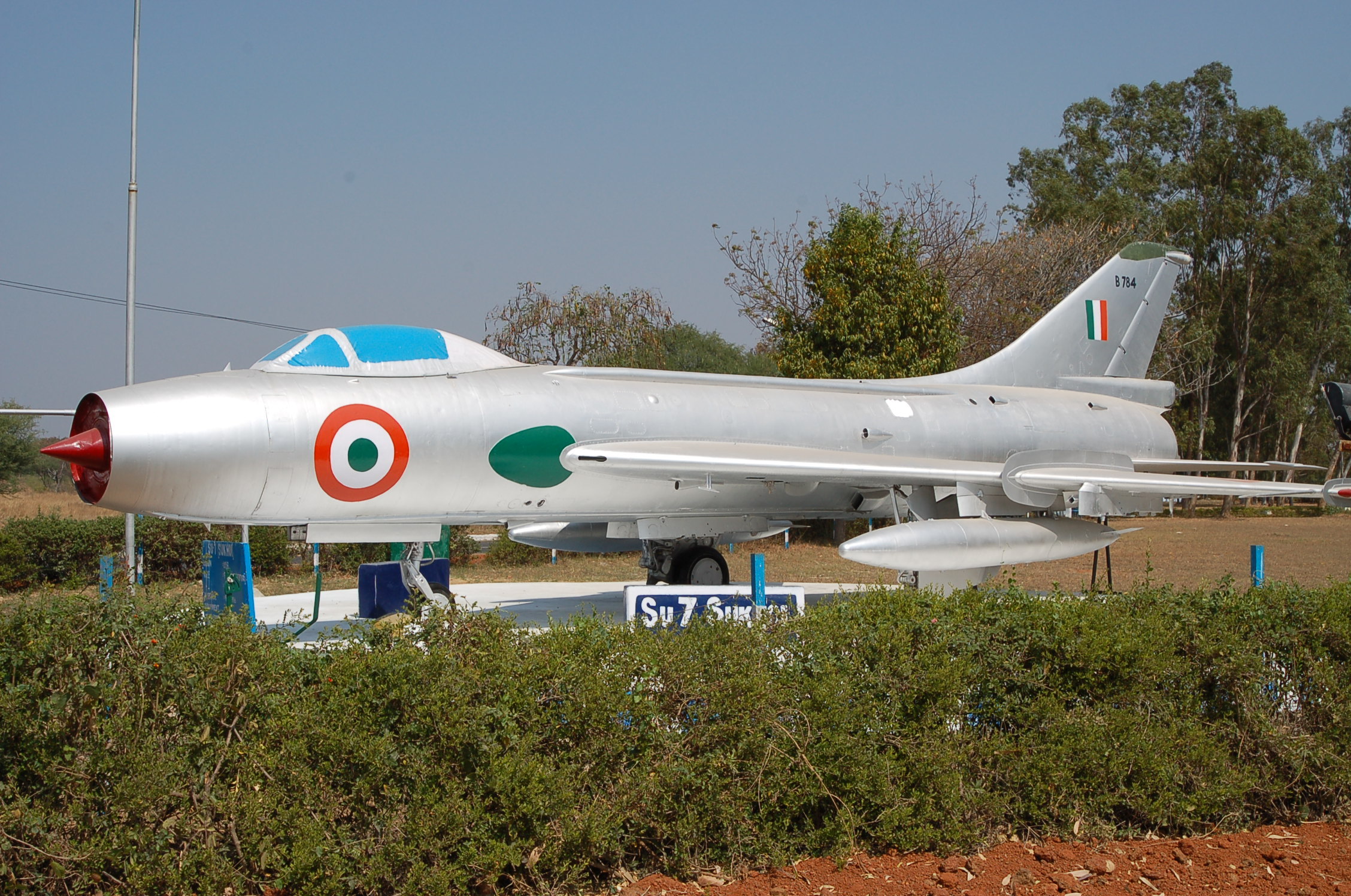
In the Soviet Union, the Su-7B was first received by the 642nd Fighter-Bomber Aviation Regiment (Voznesensk, Mykolaiv region). In total, 30 aviation units of the USSR Air Force were equipped with aircraft of this family. More than 740 aircraft were exported to nine countries. Poland and Czechoslovakia received aircraft that were almost identical to those intended for the USSR. Algeria, Afghanistan, Egypt, India, Iraq, North Korea, and Syria received “commercial” aircraft with slightly simplified equipment. The Su-7 was used in a number of regional conflicts, including wars in the Middle East and between India and Pakistan.
The Su-7B proved to be far from the best aircraft for direct troop support. In addition, it was very accident-prone, with 114 crashes and over 220 accidents in the USSR alone. In general, experience has shown that supersonic speed is not that important for a battlefield aircraft. Good protection, maneuverability, takeoff and landing characteristics, as well as more powerful weapons are much more important. It is not surprising that the 1970s saw a “renaissance” of attack aviation, and later, multi-role fighters entered the world arena.
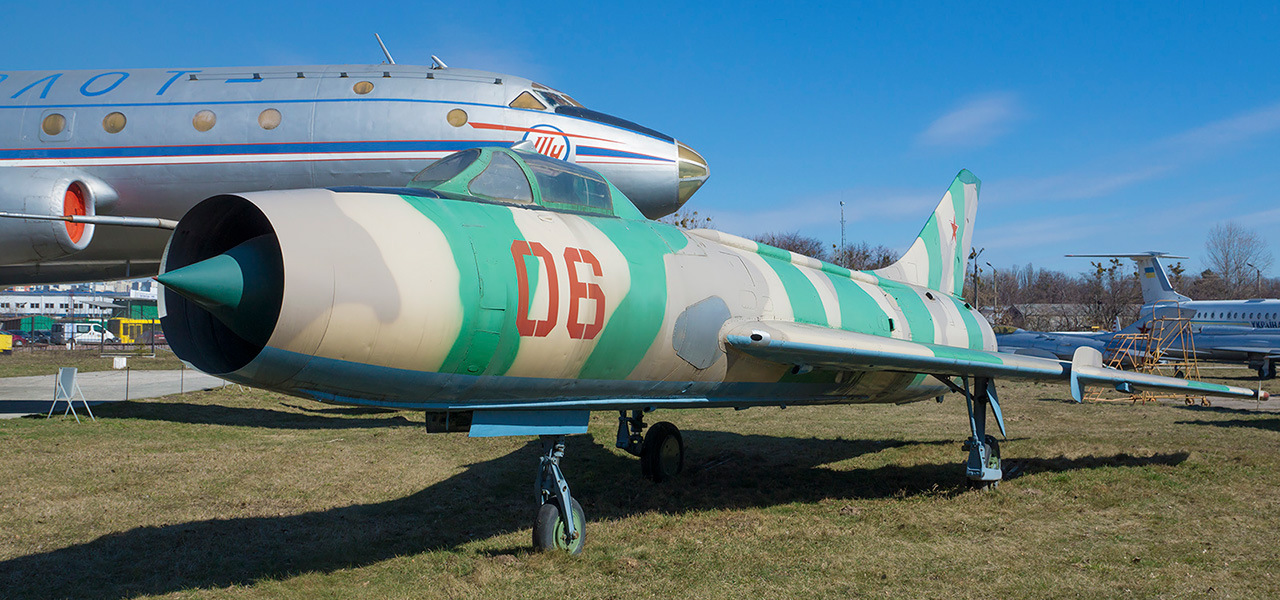
The O.K. Antonov State Aviation Museum displays a Su-7BM (factory No. 5218), which was built in 1964 in Komsomolsk-on-Amur. The aircraft was received on October 14, 2002, from the Alexander Dovzhenko Film Studio.